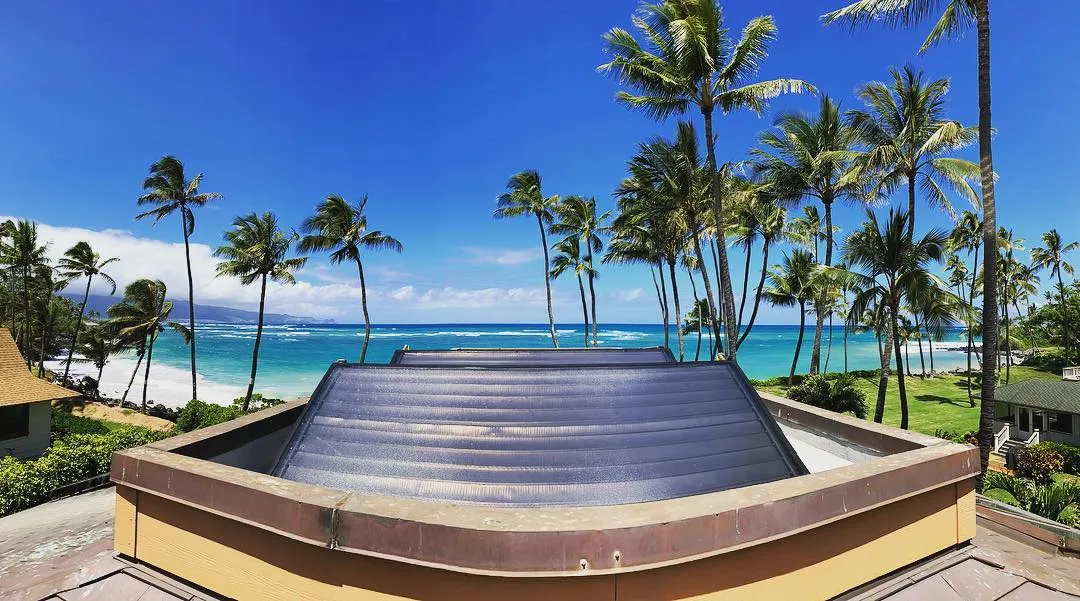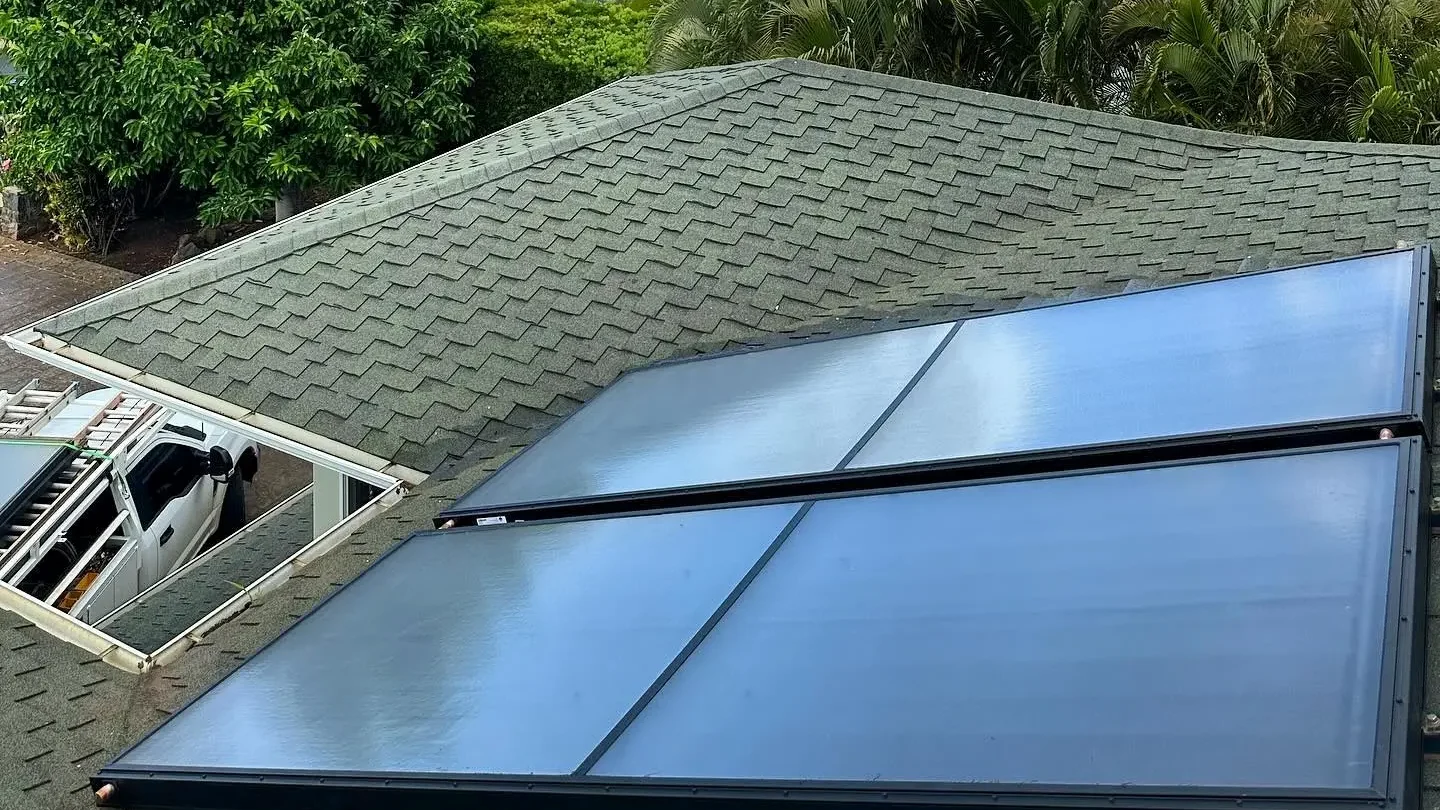
Maui homeowners pay some of the highest electricity rates in the United States, and water heating is one of the largest recurring energy loads in a typical home. A properly sized solar water heater in Maui uses the island’s abundant sunshine to heat water directly, reducing dependence on the electric grid and delivering some of the fastest payback periods available among home energy upgrades.
Unlike solar panels, which convert sunlight into electricity, a solar hot water system captures thermal energy from the sun and transfers it to a storage tank. That makes it a highly efficient solution for showers, laundry, dishes, and everyday household hot water—especially in Maui’s warm, sunny climate.
This guide explains how solar water heaters work in Maui, what they cost, how much you can save, which incentives may apply, how to choose the right system, and what to expect during installation.
Why Solar Water Heating Makes Sense in Maui
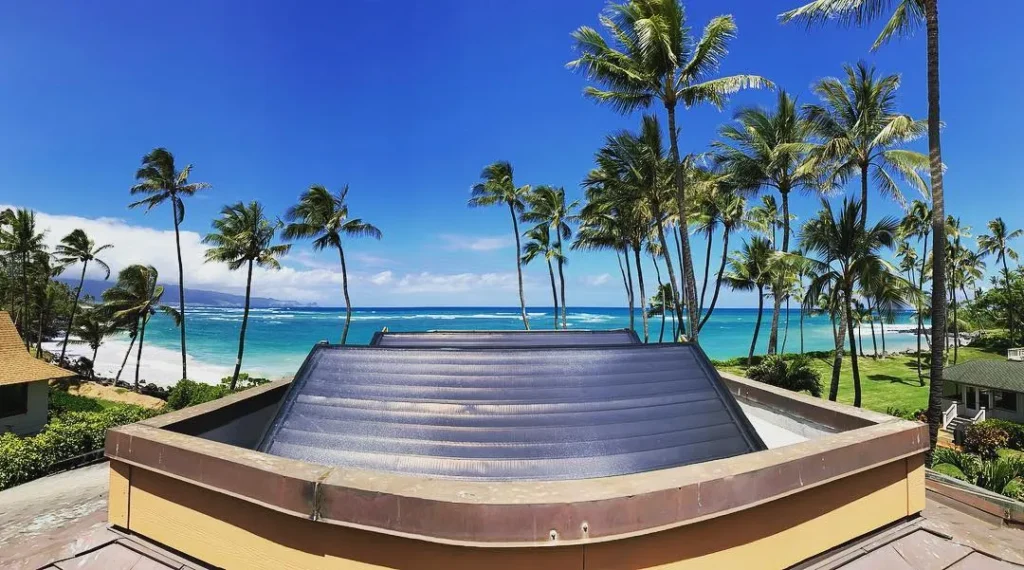
Maui is one of the best places in Hawaii—and arguably one of the best places in the country—to use solar thermal technology. The island receives strong solar exposure throughout the year, and outdoor temperatures remain relatively mild, which reduces heat loss from pipes, tanks, and collectors.
For many Maui households, water heating can represent a meaningful share of the monthly electric bill. A solar water heater addresses that load directly instead of simply producing more electricity to offset it. Because solar thermal collectors are designed specifically to heat water, they can be extremely efficient at that single task.
A solar hot water system is also a practical upgrade for homeowners who want to reduce energy costs without committing to a full rooftop solar PV and battery installation. It requires less roof space than a typical PV array, has a lower upfront cost, and can begin producing savings immediately after commissioning.
For new single-family homes in Hawaii, solar water heating has also been part of the state’s residential energy requirements, with limited exceptions and alternatives allowed under state rules.capitolwebsite+1
How a Solar Water Heater Works
A solar water heater does not generate electricity. Instead, it uses sunlight to heat a fluid or the water itself, then stores that heated water for household use.
The Main Components
A typical residential solar hot water system in Maui includes:
- Solar collectors mounted on the roof, usually facing south, southeast, or southwest for optimal sun exposure.
- A insulated storage tank, often installed in the garage, utility area, or another protected location.
- Circulation piping that moves water or heat-transfer fluid between the collector and tank.
- A pump and controller for active systems, which regulate circulation based on temperature differences.
- A backup water-heating element, which ensures hot water is available during extended cloudy periods, high-demand days, or maintenance.
On a sunny Maui day, the collectors absorb solar radiation and heat the working fluid. That heat is transferred to the water in the storage tank. When household demand exceeds solar production, the backup element maintains comfort without leaving the home without hot water.
Types of Solar Water Heaters for Maui Homes
There is no single “best” solar water heater for every property. The right system depends on roof orientation, household size, water-use habits, budget, and whether the home already has a suitable storage tank.
Active Closed-Loop Systems
Active closed-loop systems are among the most common choices for Hawaii homes. They use a heat-transfer fluid that circulates through the solar collectors and a heat exchanger, warming the household water without exposing potable water directly to the collector loop.
These systems are durable, efficient, and well suited to Maui’s climate. They also perform reliably across a wide range of weather conditions because the controller only runs the pump when the collector is warmer than the storage tank.
Active Direct Systems
In a direct system, household water circulates directly through the solar collectors. These systems can be efficient and straightforward, but they require careful design to prevent freezing, scaling, corrosion, or water-quality issues.
For many coastal and upcountry Maui locations, a closed-loop system is often the safer long-term choice, particularly where mineral content, salt air, or occasional cooler temperatures may affect system components.
Passive Thermosiphon Systems
Passive systems rely on natural convection rather than a pump. As water heats in the collector, it rises into the storage tank; cooler water flows down to replace it.
These systems have fewer moving parts, which can reduce maintenance needs. However, they require careful placement of the tank above the collectors and may not be ideal for every roof layout or architectural style.
Integrated Collector-Storage Systems
Integrated collector-storage systems combine the collector and storage function in one unit. They can be compact and simple, but they may offer less stored hot water than a separate-tank system and are generally better suited to smaller households or specific use cases.
How Much Does a Solar Water Heater Cost in Maui?
The cost of a solar water heater in Maui depends on the system type, tank size, roof complexity, plumbing configuration, permitting requirements, and whether the installation is a new build or a retrofit.
As a general planning range, many Hawaii homeowners should expect a solar hot water installation to fall in the mid four figures to low five figures before incentives. The exact price varies substantially based on accessibility, piping distance, roof type, and the condition of existing plumbing.
A useful way to evaluate cost is not simply the sticker price, but the net cost after available incentives and the monthly savings the system produces.
Hawaii State Tax Credit
Hawaii offers a Renewable Energy Technologies Income Tax Credit for eligible solar water heating systems. For single-family residential property, the credit is generally 35% of the actual cost or $2,250, whichever is less.
That makes the state incentive especially valuable for Maui homeowners. For example, if an eligible system costs $6,500, 35% would equal $2,275, but the credit is capped at $2,250. Always confirm eligibility, documentation, and current rules with a qualified tax professional before relying on the credit.
Hawaii Energy Rebates
Hawaii Energy has offered rebates for eligible solar water heating installations and retrofits for qualifying electric ratepayers on Maui, Molokaʻi, Lānaʻi, Hawaiʻi Island, and Oʻahu. Program details, rebate amounts, contractor requirements, and funding availability can change, so homeowners should verify current terms before installation.
Because these rebates may be first come, first served and may require participation by an approved contractor, it is wise to ask your installer to confirm current Maui program eligibility before signing a contract.
Federal Tax Credit Status
Homeowners should be aware that the federal Residential Clean Energy Credit for solar water heaters ended for expenditures made after December 31, 2025. Systems installed in 2026 generally do not qualify for that federal credit, even if a deposit was made in 2025.
This makes Hawaii’s state credit and any current utility or program rebates even more important when calculating the real cost of a Maui solar water heater.
How Much Can You Save With Solar Hot Water in Maui?
Savings depend on how much hot water your household uses, your current water-heating fuel, system efficiency, and household habits. Homes with electric water heaters often see the clearest savings because every kilowatt-hour avoided is a direct reduction in the Maui electric bill.
A well-designed solar water heater can offset a large portion of routine water-heating energy use. In practical terms, that can translate into meaningful monthly savings—particularly for families with multiple showers per day, frequent laundry, or high dishwashing demand.
The strongest savings usually occur when:
- The home currently uses an older electric resistance water heater.
- The household uses hot water consistently throughout the week.
- The roof has good sun exposure with limited shading.
- The system is properly sized for the number of occupants.
- The backup element is used only when necessary.
- The system receives routine maintenance.
For many Maui homeowners, solar hot water is attractive because the investment is smaller than a full solar PV system, while the savings begin immediately. Once the system has paid for itself, the sun continues to provide most of the energy needed for daily hot water.
Solar Water Heater vs. Solar PV in Maui
Many homeowners ask whether they should install solar hot water, solar PV, or both. The answer depends on your goals.
| Factor | Solar Water Heater | Solar PV |
|---|---|---|
| Primary purpose | Heats water directly | Produces electricity |
| Typical upfront cost | Lower | Higher |
| Roof space required | Less | More |
| Best for | Reducing water-heating costs | Offsetting whole-home electricity use |
| Battery backup | Not applicable | Can be paired with batteries |
| Payback potential | Often faster for water-heating loads | Stronger for whole-home energy offset |
| Ideal use case | Homes with high hot-water demand | Homes with AC, EVs, high overall usage |
Solar water heaters are not a replacement for solar PV if your goal is to offset air conditioning, appliances, lighting, EV charging, and overall household electricity use. However, they are often the smartest first step for homeowners who want a focused, lower-cost upgrade with a clear return.
For homes with both high hot-water demand and high overall electricity use, combining solar hot water with solar PV can be the most efficient approach. The solar thermal system handles water heating, while PV powers the rest of the home.
Is Solar Hot Water Right for Your Maui Home?
A solar water heater may be an excellent fit if your home meets several of the following conditions:
- You have an electric water heater and want to reduce monthly energy costs.
- Your roof receives several hours of direct sunlight per day.
- Your household uses a consistent amount of hot water.
- You want a lower-cost alternative to a full solar PV system.
- You want to reduce reliance on imported fossil fuels and grid electricity.
- You are building or renovating a home and want to plan plumbing and roof layout efficiently.
- You want a long-term hot-water solution with relatively simple operating requirements.
Solar hot water may be less ideal if your roof is heavily shaded, your household uses very little hot water, or your roof structure needs significant repair before installation. In those cases, a site assessment is essential.
Choosing the Right System Size
System sizing matters more than many homeowners realize. A system that is too small may rely heavily on the backup element, reducing savings. A system that is oversized may cost more than necessary and take longer to pay back.
Installers typically consider:
- Number of people in the home.
- Daily hot-water consumption.
- Number of bathrooms and fixtures.
- Washer, dishwasher, and spa or soaking-tub usage.
- Roof orientation and shading.
- Available tank space.
- Existing plumbing layout.
- Desired backup capacity.
For many Maui families, a properly sized residential system with an appropriately sized storage tank provides the best balance between comfort, performance, and cost. The goal is not simply to install the largest collector possible—it is to match solar production to real household demand.
What Happens During Installation?
A professional solar water heater installation in Maui generally follows these steps:
- Site assessment: The installer reviews roof condition, orientation, shading, plumbing, electrical connections, tank location, and structural considerations.
- System design: The contractor selects collector type, tank size, circulation method, and backup configuration.
- Permitting: The installer prepares documentation and obtains required county permits.
- Installation: Collectors are mounted, piping is run, the tank is installed, and controls are connected.
- Inspection and commissioning: The system is tested for leaks, flow, temperature rise, controller operation, and safe backup operation.
- Homeowner orientation: The installer explains how to monitor performance, use the backup element efficiently, and recognize warning signs.
A quality installer should provide a clear proposal that includes equipment specifications, warranty terms, permit responsibilities, timeline, total price, and expected performance.
Maintenance Requirements in Maui
Solar water heaters are relatively low-maintenance, but they are not maintenance-free. Maui’s coastal environment, mineral-rich water in some areas, and strong sun exposure make periodic service important.
Recommended maintenance may include:
- Annual visual inspection of collectors, piping, insulation, and mounting hardware.
- Checking for leaks, corrosion, damaged insulation, or loose connections.
- Flushing the system when appropriate to reduce sediment and mineral buildup.
- Testing pumps, sensors, valves, and controllers on active systems.
- Inspecting the backup heating element and thermostat.
- Reviewing system performance after major storms or extended cloudy periods.
Preventive maintenance protects your investment and helps the system maintain strong performance over its lifespan. It is especially important for homes near the ocean, where salt air can accelerate corrosion on exposed components.
Common Solar Water Heater Problems
Most issues can be avoided with proper design and routine service. Common problems include:
- Insufficient hot water: Often caused by undersizing, excessive demand, shading, collector issues, or a failed backup element.
- Leaks: May occur at fittings, valves, tanks, or collector connections.
- Air in the system: Can reduce circulation and performance in some system types.
- Scale buildup: More common in areas with hard water and can reduce heat transfer.
- Controller or sensor failure: Can prevent the pump from operating correctly.
- Storm damage: High winds and debris can affect roof-mounted equipment if not properly secured.
If your system suddenly produces lukewarm water, makes unusual noises, shows error codes, or develops visible leaks, schedule service promptly. Delaying repairs can reduce efficiency and lead to more expensive damage.
How Long Does a Solar Water Heater Last?
A quality solar water heater can provide dependable service for many years when properly installed and maintained. Collectors and tanks are built for long-term outdoor use, but individual components such as pumps, sensors, valves, controllers, and backup elements may need replacement sooner.
The lifespan depends on:
- Equipment quality.
- Installation quality.
- Water quality.
- Maintenance frequency.
- Exposure to salt air and storms.
- How often the backup element is used.
Before choosing an installer, ask about equipment warranties, labor warranties, service response times, and the availability of replacement parts in Hawaii.
Solar Water Heaters and Maui Home Value
Energy-efficient features can make a home more attractive to buyers, particularly in a market where electricity costs are a major ongoing expense. A solar water heater may be viewed as a practical upgrade because it reduces one of the home’s recurring utility loads.
Unlike some cosmetic improvements, solar hot water delivers a functional benefit every day: lower operating costs and reliable hot water. For buyers comparing similar Maui properties, an owned, well-maintained solar water heating system can be a meaningful differentiator.
If you plan to sell in the future, keep records of the installation, permits, warranties, maintenance history, and incentive documentation. These materials help demonstrate that the system was professionally installed and properly maintained.
HOA, Roof, and Permitting Considerations
Some Maui homeowners worry that an HOA or community association will prevent solar installation. Hawaii law generally protects the ability of owners of single-family homes and townhouses to install solar energy devices, though associations may have reasonable rules related to placement, safety, and installation standards.
Before installation, homeowners should:
- Review HOA rules and architectural requirements.
- Confirm roof age and structural condition.
- Verify permit requirements with the appropriate Maui County department.
- Ensure the contractor is licensed and insured.
- Ask how roof penetrations will be sealed and warranted.
- Confirm how the system will be protected against wind and corrosion.
A reputable local installer should manage these details and explain them clearly before work begins.
Solar Water Heater FAQ
How much does a solar water heater cost in Maui?
The total cost depends on the system type, tank size, roof access, plumbing distance, and permitting. Before Hawaii incentives, many residential installations fall in the mid four-figure to low five-figure range. Hawaii’s state tax credit can reduce the effective cost by up to $2,250 for eligible single-family residential systems.
Does a solar water heater work on cloudy days?
Yes. Solar collectors still produce some heat on cloudy days, though output is lower. Every properly designed system includes a backup heating element to ensure your household has hot water during extended cloudy periods or unusually high demand.
How long does installation take?
Many residential installations can be completed in one to two working days once permits and equipment are ready. The full timeline may be longer if permitting, roof repairs, HOA approval, or special plumbing modifications are required.
Can I use my existing water heater tank?
Sometimes. If the existing tank is in good condition and compatible with the solar system design, it may be possible to integrate it. In other cases, replacing the tank with a solar-compatible storage tank is the better long-term option.
Will a solar water heater eliminate my electric bill?
No. A solar water heater reduces the energy used specifically for water heating. It will not offset lighting, refrigeration, air conditioning, cooking, laundry appliances, EV charging, or other electrical loads. For whole-home energy reduction, many homeowners pair solar hot water with solar PV.
Is solar hot water better than solar panels?
Neither is universally better. Solar hot water is usually the lower-cost, focused solution for reducing water-heating expenses. Solar PV is better for offsetting overall household electricity use. Many Maui homes benefit from using both technologies strategically.
What incentives are available in Maui?
Eligible Hawaii homeowners may qualify for the state solar water heating tax credit, generally up to $2,250 for single-family residential systems. Hawaii Energy has also offered rebates for eligible Maui customers, subject to program terms, contractor requirements, and available funding.programs.dsireusa+1
Does the federal tax credit still apply?
For most homeowners installing in 2026, no. The federal Residential Clean Energy Credit for solar water heaters ended for expenditures made after December 31, 2025.
How long until the system pays for itself?
Payback depends on your current water-heating cost, household usage, system price, and incentives. Homes with high hot-water demand and older electric water heaters often see faster returns because they avoid more grid electricity each month.
Do solar water heaters need maintenance?
Yes. Annual inspections and periodic flushing or servicing help prevent scale buildup, corrosion, leaks, and control issues. Maintenance is particularly important in Maui’s coastal environment.
Can a solar water heater survive Maui storms?
A properly engineered system should be designed for local wind requirements and securely mounted to a structurally sound roof. Ask your installer about wind-load design, mounting methods, and warranty coverage for storm-related issues.
What size solar water heater do I need?
The right size depends on household occupancy, bathrooms, appliances, and daily hot-water habits. A professional site assessment is the best way to determine the correct collector and tank capacity.
Can I install solar hot water myself?
DIY installation is not recommended. Solar water heaters involve roofing, plumbing, electrical connections, pressurized components, permits, and safety requirements. Professional installation protects performance, warranty coverage, and long-term reliability.
Final Thoughts: Is a Solar Water Heater Worth It in Maui?
For many Maui homeowners, a solar water heater is one of the most practical energy upgrades available. It targets a major household energy load, uses the island’s excellent solar resource, requires less roof space than PV, and can deliver meaningful monthly savings with a relatively modest upfront investment.
The best results come from proper sizing, quality equipment, professional installation, and routine maintenance. Homeowners should also confirm current Hawaii state tax credit eligibility and any active Hawaii Energy rebate programs before installation, since incentives and program rules can change.programs.dsireusa+1
If your goal is to reduce energy costs quickly without committing to a full solar PV and battery system, a solar water heater deserves serious consideration. And if your household also has high air-conditioning use, an electric vehicle, or a large overall electric load, combining solar hot water with solar PV may create the strongest long-term energy strategy for your Maui home.
Ready to find out how much you could save? Contact Laulima Solar for a free solar water heater assessment for your Maui home. Our team can evaluate your roof, hot-water usage, existing equipment, and incentive eligibility, then recommend the right system for your budget and household.