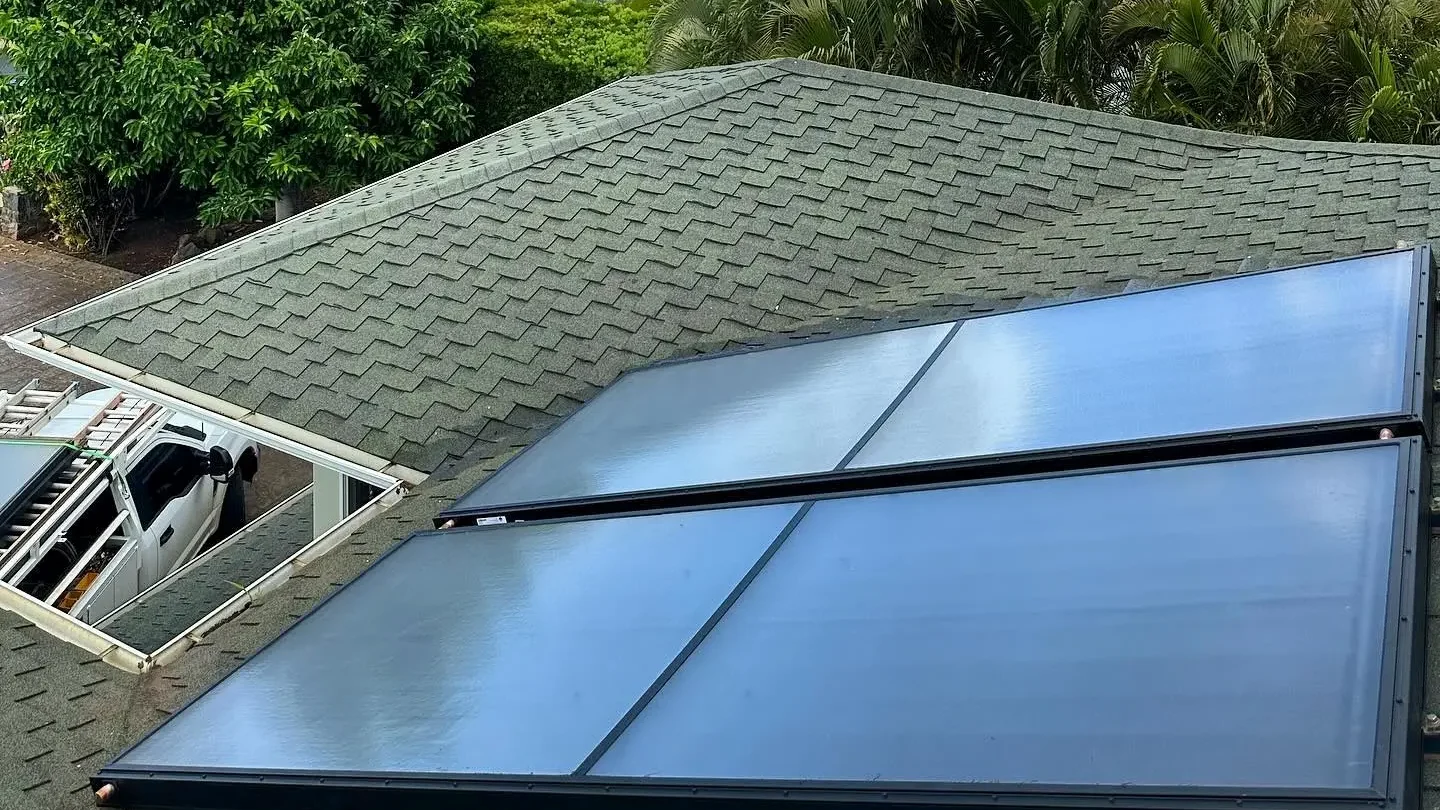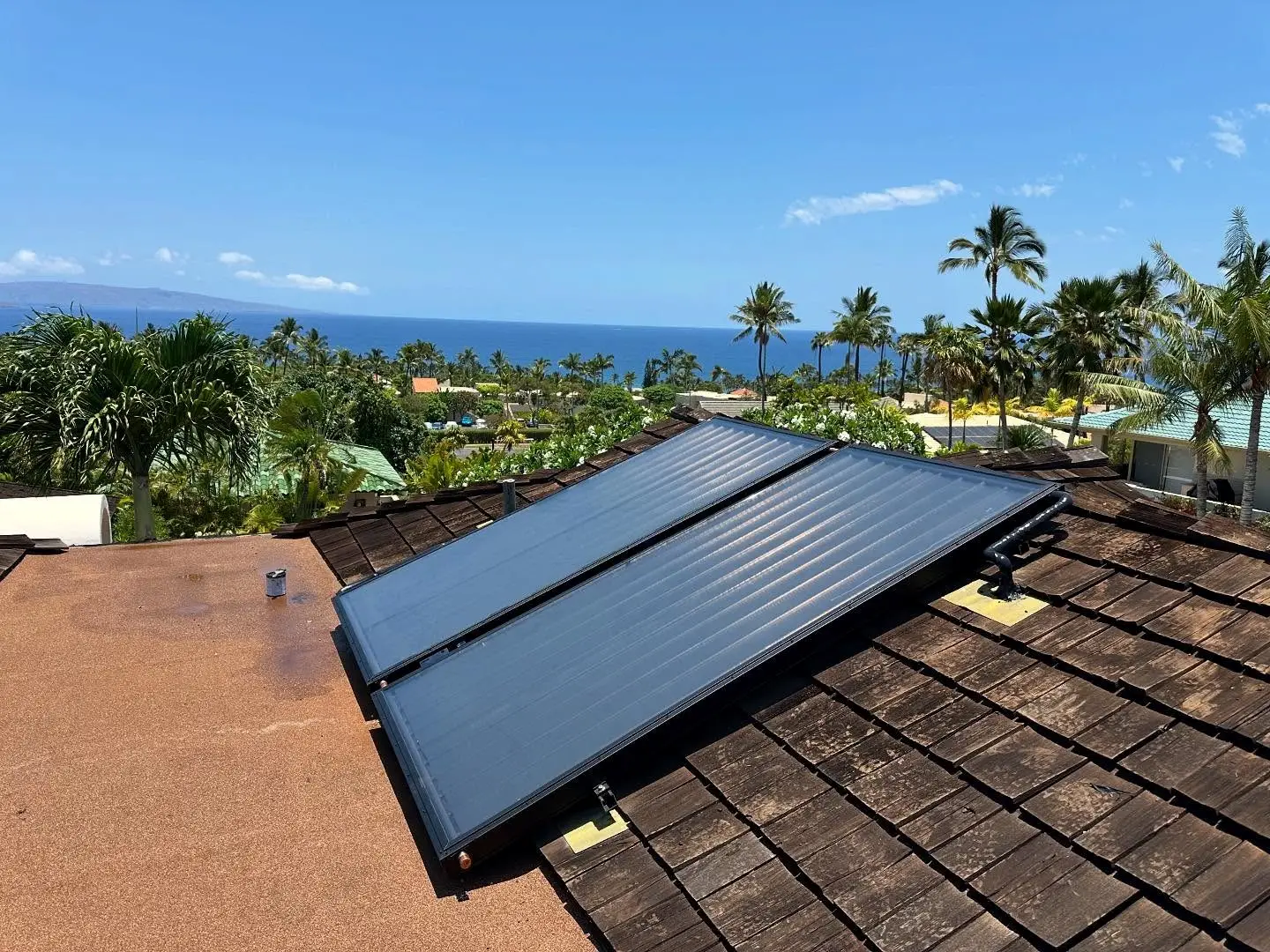
Understanding Maui solar water heater state credits and rebates is one of the smartest ways to reduce the upfront cost of a more efficient hot-water system. With electricity rates on Maui among the highest in the nation, solar water heating can help homeowners reduce reliance on grid electricity while taking advantage of Hawaii’s renewable energy incentives.
At Laulima Solar LLC, we help Maui homeowners understand the incentives available for solar water heating, maintain existing systems, and make informed decisions before investing in new equipment. This guide explains the Hawaii state tax credit, the current Hawaiʻi Energy rebate for Maui, financing options, eligibility requirements, and the documentation homeowners should keep.
Important: Incentive amounts, eligibility rules, contractor requirements, and funding availability can change. Always confirm current program details with the Hawaii Department of Taxation, Hawaiʻi Energy, Hawaiian Electric, and a qualified tax professional before relying on any credit or rebate.
Why Solar Water Heater Incentives Matter in Maui
Maui homeowners face high electricity costs, and conventional electric water heaters can contribute substantially to monthly energy use. A solar water heater reduces that load by using sunlight to heat water directly, rather than relying entirely on grid electricity.
Unlike solar panels, which produce electricity for the entire home, a solar water heater has one focused job: heating water for showers, laundry, dishwashing, and other household needs. That focused purpose is why solar thermal systems can be an efficient upgrade for homes with consistent hot-water demand.
State credits and rebates matter because they can lower the effective cost of a system, shorten the time needed to recover the investment, and make solar hot water more accessible for homeowners who want to reduce energy use without installing a full solar PV array.
Hawaii State Solar Water Heater Tax Credit
The primary statewide incentive for residential solar water heating is Hawaii’s Renewable Energy Technologies Income Tax Credit, commonly referred to as the RETITC.
For eligible solar water heating systems installed on single-family residential property, the credit is generally 35% of the actual system cost or $2,250, whichever is less.
How the Credit Is Calculated
The credit is generally based on the lower of two figures:
-
35% of the eligible system cost.
-
The maximum credit amount of $2,250.
For example, if an eligible system costs $6,000, 35% of that cost would be $2,100. Because $2,100 is below the $2,250 cap, the credit amount would generally be $2,100, subject to eligibility and current tax rules.
If the system cost were higher, the credit would generally be limited to the $2,250 maximum. The exact calculation should always be confirmed with a qualified tax professional and based on the rules in effect for the tax year in which the system is placed in service.
Who May Qualify for the State Credit?
Eligibility can depend on several factors, including:
-
The property must generally be located in Hawaii.
-
The system must meet state requirements for solar water heating equipment.
-
The homeowner must typically be the taxpayer claiming the credit.
-
The system must be properly installed and placed in service during the qualifying tax year.
-
The installation must generally comply with applicable permitting and code requirements.
-
The homeowner must retain documentation supporting the cost and installation of the system.
Because tax credits depend on individual circumstances, homeowners should not assume eligibility based solely on the type of equipment installed. Rental properties, second homes, newly constructed homes, leased systems, and certain financing structures may be treated differently.
Documentation to Keep for the State Credit
Homeowners should retain complete records related to the solar water heater installation, including:
-
Itemized invoice showing equipment and installation costs.
-
Equipment specifications or manufacturer documentation.
-
Proof of payment.
-
County permit records.
-
Final inspection or completion documentation.
-
Contractor license and business information.
-
Photos of the installed system, if available.
-
Warranty documents.
-
Any utility or rebate program paperwork.
These records help support the credit claim and may be useful if the homeowner is later audited, sells the property, or needs to verify system history.
Hawaiʻi Energy Solar Water Heater Rebate in Maui
In addition to the state tax credit, eligible Maui homeowners may qualify for a rebate through Hawaiʻi Energy. For the 2026–2027 program cycle, Hawaiʻi Energy increased the solar water heater rebate for Maui County to up to $2,750 for qualifying installations.
This is an instant rebate, meaning it is deducted from the contractor invoice when the installation is completed by a participating Clean Energy Ally contractor. The contractor submits the rebate application on the homeowner’s behalf.
The rebate is available for qualifying new installations or eligible retrofits and is subject to program terms, approved equipment, participating-contractor requirements, and funding availability. Hawaiʻi Energy notes that its rebates are offered on a first-come, first-served basis and may change or be discontinued without advance notice.
The 2026–2027 rebate program runs through June 30, 2027.
Basic Hawaiʻi Energy Eligibility Requirements
Based on Hawaiʻi Energy’s solar water heating program requirements, homeowners generally need to meet several conditions to qualify.
-
The customer must be an electric ratepayer of Hawaiian Electric, Maui Electric, or Hawaiʻi Electric Light, depending on the island.
-
The customer must generally have at least six months of utility payment history.
-
The dwelling must be occupied year-round as the customer’s primary residence.
-
The system must replace an existing electric water heater, an electric heat pump water heater, or an existing solar water heating system that has reached the end of its useful life and has electric backup.
-
The equipment must be listed as an accepted product under the Hawaiʻi Energy program.
-
The installation must be completed by a participating contractor.
-
A Hawaiʻi Energy rebate work order must generally be issued before installation begins.
-
The homeowner must complete and submit the required rebate application and supporting documents.
These requirements are important because installing a system before receiving the required work-order authorization, using non-approved equipment, or working with a non-participating contractor can affect rebate eligibility.
Equipment and Installation Requirements
Hawaiʻi Energy’s program has generally required solar water heating equipment to be SRCC OG-100 certified. This certification indicates that the collector or system has been tested and rated under recognized solar thermal performance standards.
The program also requires installation by a participating contractor and adherence to program-specific installation standards. That means homeowners should not assume that any solar contractor or any equipment package will automatically qualify.
Before signing a contract, ask the installer to confirm:
-
Whether they are a current Hawaiʻi Energy participating contractor.
-
Whether the proposed collector and tank are accepted products.
-
Whether the system meets current program sizing and installation requirements.
-
Whether a rebate work order is required before installation.
-
What documentation the contractor will provide after completion.
-
Whether the quoted price assumes the rebate is available and approved.
New Construction Restrictions
Hawaiʻi Energy’s solar water heating rebate program has generally excluded newly constructed homes. This is an important distinction for homeowners building a new house in Maui.
A newly built home may still be subject to state requirements related to solar water heating or approved alternatives, but that is separate from Hawaiʻi Energy’s retrofit rebate program. Homeowners building new should confirm current building-code requirements, permit expectations, and any applicable incentive programs before finalizing their water-heating design.
Maui Solar Water Heater Financing
Maui homeowners may also be able to use interest-free financing through the Maui Solar Roofs Initiative, a partnership between Hawaiian Electric and Maui County. The program is available to qualifying Maui County residents with a Hawaiian Electric account and a good payment history over the previous 12 months.
To qualify, the home must generally be occupied year-round as the primary residence, and the solar water heating system must replace an existing electric water heater or an existing solar water heating system.
Under the program’s example, a homeowner pays a 35% down payment based on the system cost after the Hawaiʻi Energy rebate, with the remaining balance financed interest-free. Because financing terms and eligibility requirements can change, homeowners should confirm current details directly with Hawaiian Electric or the program administrator before signing an agreement.
Before choosing financing, homeowners should compare:
-
The total cost of the system.
-
The expected Hawaiʻi Energy rebate.
-
The expected Hawaii state tax credit.
-
Interest rate and loan term.
-
Monthly payment amount.
-
Any fees or prepayment penalties.
-
Whether the financing program is compatible with the selected installer and equipment.
-
Whether the rebate is assigned to the lender, paid to the homeowner, or deducted from the project cost.
Can You Combine the State Credit and Hawaiʻi Energy Rebate?
In many cases, the Hawaii state solar water heater tax credit and the Hawaiʻi Energy rebate are separate incentives and may be combined, provided the homeowner meets each program’s requirements. Maui County’s solar water heater financing information specifically notes that financing may be combined with the Hawaiʻi Energy rebate and tax credits.
However, combining incentives does not mean every dollar of cost qualifies for every program. The state credit is generally based on eligible system cost and tax rules, while the Hawaiʻi Energy rebate is based on program eligibility, approved equipment, participating-contractor installation, and available funding.
A practical approach is to ask the installer for a written estimate that separates:
-
Total installed system cost.
-
Equipment cost.
-
Labor cost.
-
Permit costs.
-
Expected Hawaiʻi Energy rebate.
-
Expected Hawaii state tax credit.
-
Estimated net cost after incentives.
-
Any financing payment or interest cost.
For example, if an eligible Maui solar water heater installation costs $8,000 and qualifies for the current Hawaiʻi Energy rebate, the instant rebate could reduce the invoice by up to $2,750. The homeowner may then evaluate the Hawaii state solar water heater tax credit separately, generally up to $2,250 for eligible single-family residential systems, subject to current tax rules and eligibility.
Solar Water Heater Tune-Up Rebate in Maui
Maui homeowners with existing solar water heaters may also qualify for a tune-up rebate. For the 2026–2027 cycle, Hawaiʻi Energy lists a $325 rebate for Maui County for qualifying solar water heater tune-ups.
The rebate applies to residential solar water heating systems that are at least five years old. The service must be completed by a participating Clean Energy Ally contractor, and the rebate is deducted from the invoice after service is completed.
This is especially relevant for homeowners whose systems are still operating but may be losing efficiency due to scale buildup, worn components, sensor issues, or reduced collector performance.
A professional tune-up may include:
-
Inspecting collectors, mounting hardware, piping, and insulation.
-
Checking for leaks, corrosion, or damaged components.
-
Testing circulation pumps, sensors, valves, and controllers.
-
Flushing the system when appropriate.
-
Inspecting the backup heating element and thermostat.
-
Verifying safe and efficient system operation.
Common Mistakes That Can Jeopardize Incentives
Solar water heater incentives often have strict procedural requirements. A system may be high quality and properly installed, but still fail to qualify if the paperwork or process is incomplete.
Common mistakes include:
-
Installing before obtaining a required Hawaiʻi Energy work order.
-
Using equipment that is not on the program’s accepted-product list.
-
Hiring a contractor who is not participating in the rebate program.
-
Failing to submit the rebate application, invoice, sizing form, or permit documentation within the required deadline.
-
Installing a system in a home that does not meet primary-residence requirements.
-
Assuming a newly constructed home qualifies for the retrofit rebate.
-
Losing invoices, permits, or equipment documentation needed for the state tax credit.
-
Assuming rebate availability without confirming current funding.
Hawaiʻi Energy’s program handbook notes that work orders must generally be received within 30 days of installation to remain eligible for payment, and that missing or late documentation can result in penalties or cancellation of the rebate.
What About the Federal Solar Tax Credit?
Homeowners should be aware that the federal Residential Clean Energy Credit for solar water heaters ended for expenditures made after December 31, 2025. Systems placed in service in 2026 generally do not qualify for that federal credit.
This makes Hawaii’s state tax credit, the Hawaiʻi Energy rebate, and Maui financing options especially important when calculating the real cost of a solar water heater.
Questions to Ask Before Installing a Solar Water Heater
Before committing to a solar water heater project in Maui, homeowners should ask potential contractors the following questions:
-
Are you a current Hawaiʻi Energy participating contractor?
-
Is the proposed equipment SRCC OG-100 certified and accepted by the program?
-
What is the current Hawaiʻi Energy rebate amount, and is funding available?
-
Will you obtain the required rebate work order before installation?
-
What documentation will I receive for my state tax credit?
-
Does my home meet the primary-residence and utility-account requirements?
-
Does my existing water heater qualify for replacement under the program?
-
What is the total installed price, including permits and labor?
-
What warranties apply to the collectors, tank, labor, and components?
-
What maintenance will the system need after installation?
These questions help protect both the homeowner’s investment and their ability to claim available incentives.
How Laulima Solar Can Help
Laulima Solar LLC helps Maui homeowners navigate solar water heater service, repairs, system assessments, and incentive-related questions. Whether you are replacing an aging system, diagnosing a performance issue, or trying to understand whether your home qualifies for a Hawaiʻi Energy rebate, our team can help you understand the next steps.
We can also help homeowners identify the documentation they should keep for the Hawaii state solar water heater tax credit and explain what to confirm with Hawaiʻi Energy before moving forward.
Ready to Explore Solar Water Heater Incentives in Maui?
Contact Laulima Solar LLC today for a solar water heater assessment. Our team can help you evaluate your existing system, understand current incentive requirements, and determine the most practical path to lower hot-water energy costs in your Maui home.